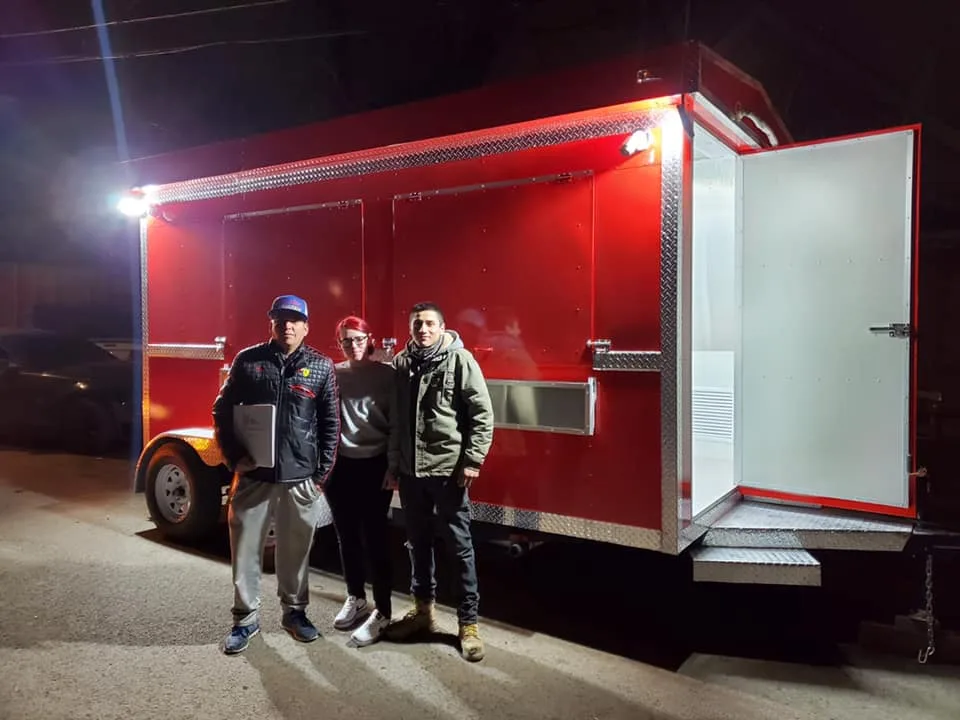
Launching a Texas food Trailers business is an exciting venture, but the initial enthusiasm often clouds the view of the most critical aspect: legality. It is important to know that your unit must operate legally, complying with various safety and hygiene regulations to avoid penalties, fines, and even the cessation of operations. The best advice is to work with expert manufacturers who know local regulations so you can have a unit that passes inspections without any issues.
Food trailers are mobile units that allow you to take your business to specific locations such as festivals, events, parks, and plazas. They must comply with various regulations to ensure consumer safety and traffic regulations to travel without any inconvenience. Otherwise, you may face legal sanctions that jeopardize the continuity of your business.
What legal mistakes should I avoid when launching a food trailer?
When it comes to Texas food Trailers, there is a common mistake that many people overlook and that can cause serious legal problems: operating in unauthorized zones. Many trailer owners assume that since they are mobile businesses, they can park anywhere with foot traffic. This is an extremely costly mistake.
Not verifying municipal ordinances regarding street commerce or private spaces can result in penalties, fines, and even legal problems that put your business at risk. To avoid this, before purchasing your unit, request the map of permitted zones for food trucks and trailers from your local city hall.
If you plan to operate on private land, make sure you have a written lease agreement that specifies commercial land use. This way, you can operate legitimately and without legal issues.
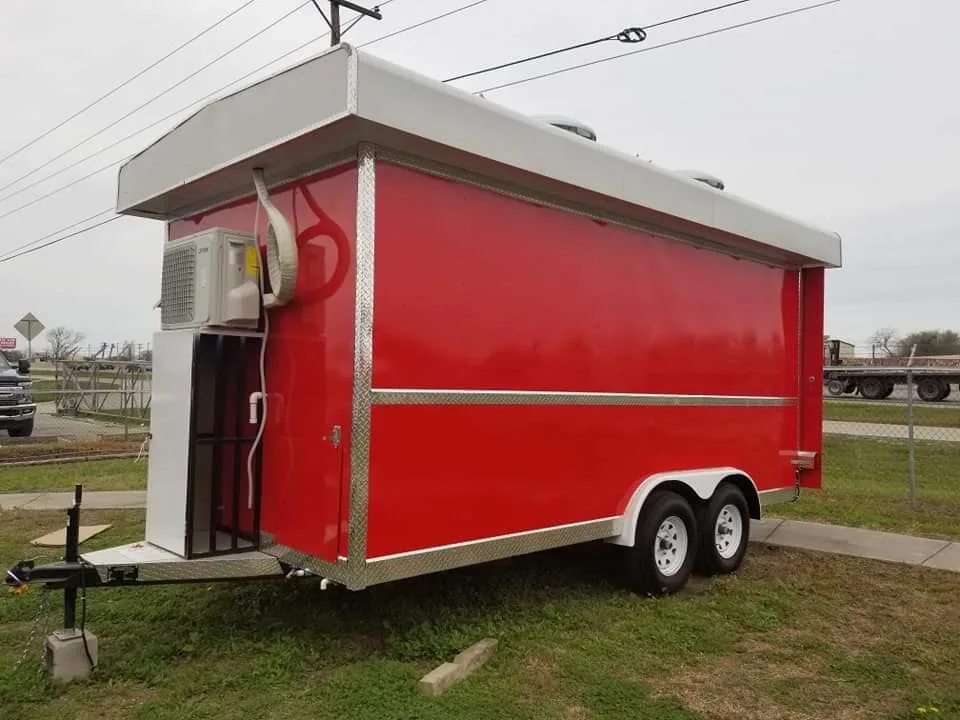
Other common mistakes you should know about include the following:
Ignoring specific sanitary certifications
A food trailer is not just a vehicle; it is a compact industrial kitchen that must comply with rigorous sanitation standards. The mistake here is thinking that the employees’ food handling permits are sufficient. It is necessary to obtain the sanitary operating permit for the physical unit.
This means that the design of your trailer must have non-porous surfaces such as stainless steel, water tanks with regulatory capacity, and refrigeration systems with visible thermometers. With manufacturers like Universal Food Trailer, this is not a problem, as the experts are thoroughly familiar with current regulations so your unit can pass inspections the first time.
Non-compliance with fire safety regulations
A food trailer for sale Texas handles LP gas and high-load electrical systems in confined spaces. This elevates the risk of incidents and potential operational hazards. Installing kitchen equipment without certified fire suppression systems or inadequate ventilation is a mistake that must be avoided.
For this, it is recommended to install an automatic suppression system if you operate fryers or grills. Make sure your trailer has a current fire department certification and properly classed, visible, and charged fire extinguishers.
Errors in business and tax structure registration
Operating as a sole proprietor can expose your assets to lawsuits or problems with the tax authority. Not legally registering the business or not filing the correct business activity is something you should not do.
To avoid this problem, establish a legal entity to separate your personal assets from those of the business. Register with the corresponding tax authority; this is vital for working at corporate events and large-scale festivals.
Insufficient insurance or inadequate coverage
A standard auto insurance policy does not cover the liabilities of custom food trailers in operation. Not having third-party liability insurance is critical in this type of business because it can bring costly consequences.
Get a specific policy for food trailers that includes civil liability for food poisoning, third-party damages during operations, and coverage for transit accidents. At Universal Food Trailer, we always recommend that the policy covers both the towing vehicle and the trailer unit.
Universal Food Trailer: expert manufacturers in Texas
The Texas food Trailers are an excellent investment option for restaurant owners and investors looking to enter the mobile food industry; however, it is important to know the necessary regulations and certifications. Universal Food Trailer manufactures units that meet the most rigorous standards to ensure legitimate operations and business continuity. You can count on specialized advice and personalized service in English and Spanish to address any related questions.
Would you like to learn more about our services? We invite you to contact us via email at info@universalfoodtrailer.com or by phone at 830 955 8655. We will provide you with all the necessary information promptly.
Frequently asked questions
Can I use my operating permit from one city in a neighboring one?
Generally, no. Each county has its own zoning and health regulations, so you must obtain a specific permit or an extension for each jurisdiction where you plan to sell.
What happens if my food trailer does not meet minimum health requirements?
The health authority can shut down your unit immediately and impose severe fines. It is vital that the manufacturer designs the trailer following local hygiene regulations from the very first sketch.
Is it mandatory to have a commissary contract to obtain the permit?
In many cities, it is a legal requirement to demonstrate that you have access to a certified base kitchen for food preparation, supply storage, and waste disposal.